.png)

Auguste
Renoir
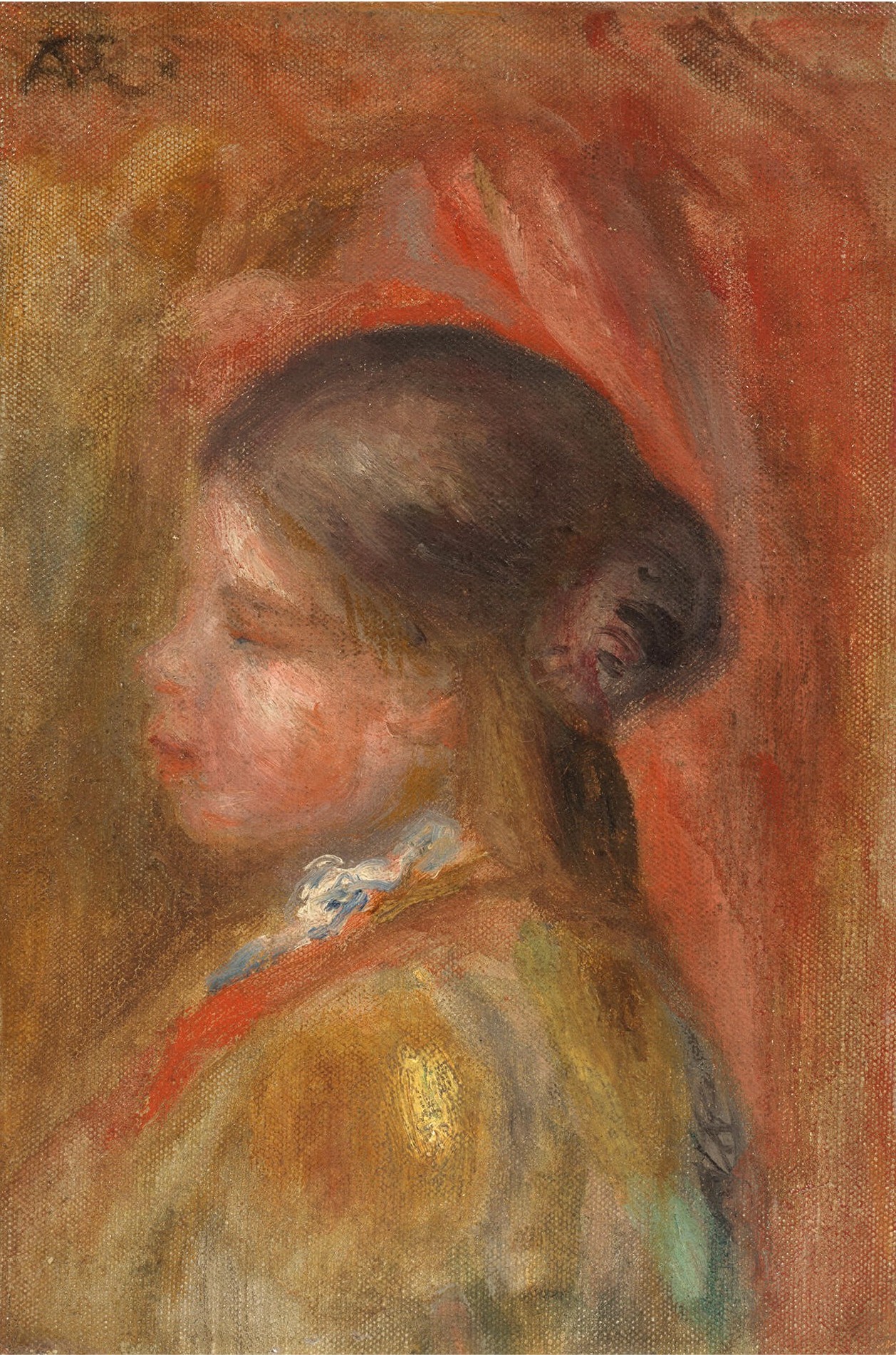
Born in 1841, Pierre-Auguste Renoir occupies an important place in the history of modern painting, of which he embodies a singular path, both deeply impressionist and resolutely attached to the figurative tradition. Trained in Paris in an academic environment, he established himself as early as the 1870s as one of the major players in the Impressionist movement, participating in founding exhibitions and developing a painting based on light, color and immediate visual sensation.
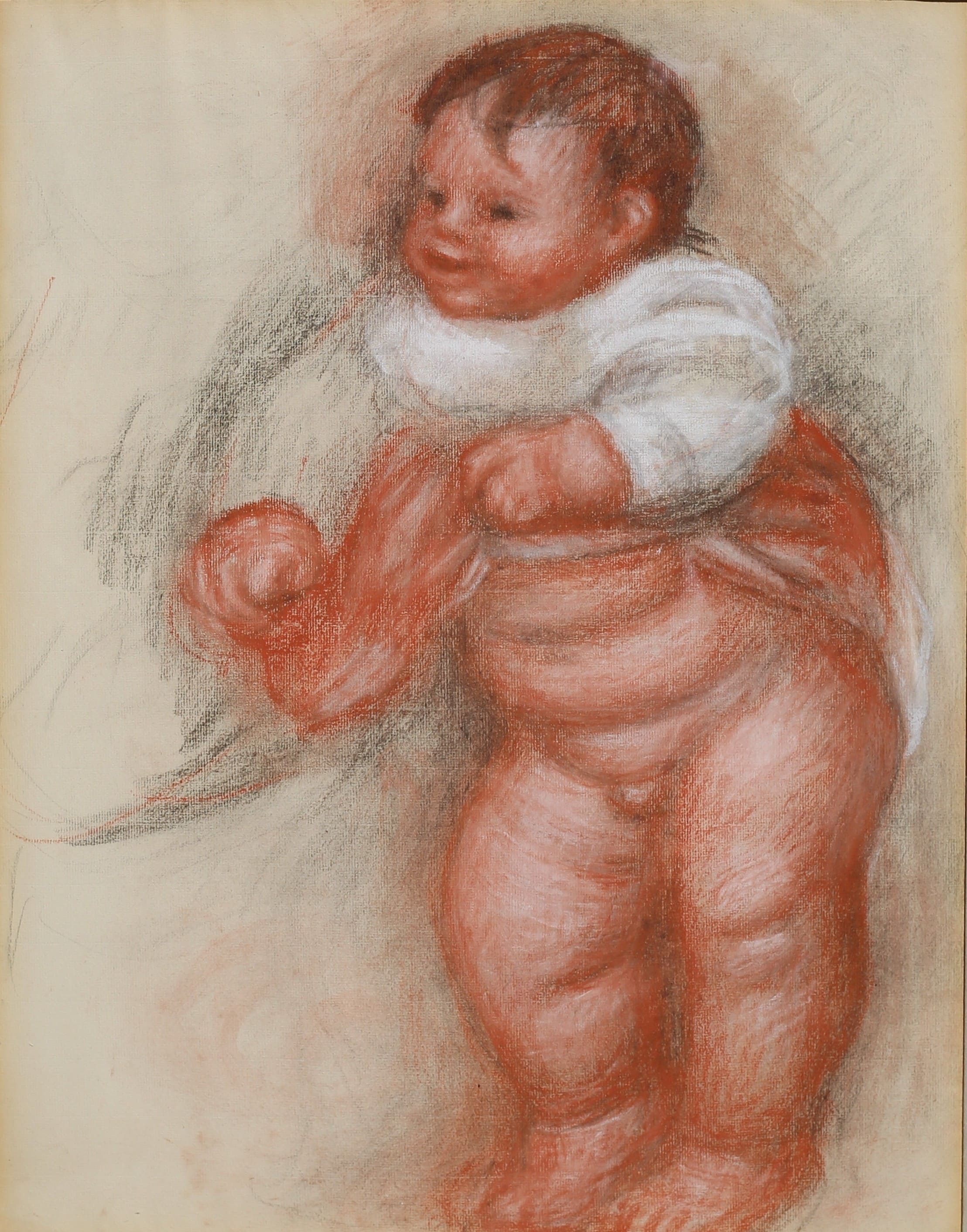
Unlike some of his contemporaries, Renoir never made a lasting break with the human figure. Very early on, his work placed the body, flesh and intimacy at the center of his work, treated with particular attention to pictorial matter and chromatic vibration. The free touch and the luminous palette of his early years reflect a constant search for life and movement.
Starting in the 1880s, Renoir began a decisive evolution. Dissatisfied by the limits of pure impressionism, he undertook a return to a more structured construction, nourished by the study of old masters and the Renaissance. This period of maturity is characterized by a strengthening of the design, a more assertive organization of volumes and a desire for formal sustainability.
In the years 1890 and 1900, Renoir developed a fully personal pictorial language, where the female figure became the heart of his research. Bodies are modelled by color, light and matter, in a sensual and timeless painting, free from any anecdotal narration. This synthesis between chromatic modernity and classical tradition gives his work a universal dimension.
Renoir continued his work with remarkable intensity, affirming a vision of painting based on the continuity, beauty and permanence of the figure. Preserved today in the collections of major institutions such as the Orsay Museum and the Orangerie Museum in Paris, the National Gallery in London and the Metropolitan Museum of Art in New York, his works constitute a reference body for the study of modern painting.